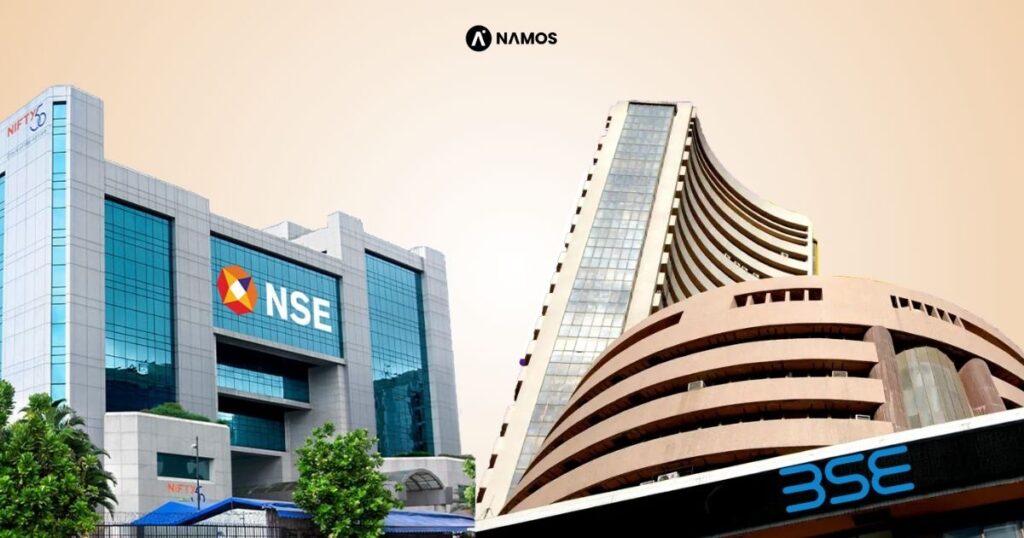
BSE vs NSE: Discover which stock exchange suits beginners best. Dive into key differences, benefits, and tips to make informed investment choices.
Overview of BSE (Bombay Stock Exchange)
The Bombay Stock Exchange, established in 1875, is Asia’s oldest stock exchange and holds a significant place in the history of India’s financial markets. Located in Mumbai, it has played a pivotal role in the development of the Indian capital market by providing a platform for trading in various financial instruments. With over 5,000 listed companies, BSE boasts one of the highest numbers of listed firms in the world, offering a diverse range of investment opportunities.
BSE’s iconic building, Dalal Street, is synonymous with stock trading in India. The exchange has grown exponentially over the decades, adapting to technological advancements and regulatory changes. Its flagship index, the BSE SENSEX, tracks the performance of 30 well-established and financially sound companies listed on the exchange, serving as a barometer of the Indian economy.
In addition to equity trading, BSE also offers trading in debt instruments, derivatives, and mutual funds. It has introduced several investor-friendly initiatives, such as BSE SME for small and medium enterprises and BSE STAR MF for mutual fund transactions, making it a versatile platform for various types of investors.
Overview of NSE (National Stock Exchange)
The National Stock Exchange, established in 1992, revolutionized the Indian stock market by introducing electronic trading. Headquartered in Mumbai, NSE is known for its modern infrastructure, transparency, and efficiency, which have attracted a large number of investors, both domestic and international. Its technological prowess has set new standards in trading, making it a preferred choice for many.
NSE’s flagship index, the NIFTY 50, comprises 50 of the largest and most liquid companies listed on the exchange. This index is widely followed by investors and serves as a benchmark for the performance of the Indian equity market. NSE’s comprehensive product offerings include equities, derivatives, currency futures, and debt instruments, catering to a diverse range of investment preferences.
One of the key features of NSE is its focus on investor education and protection. Through initiatives like the National Institute of Securities Markets (NISM) and various investor awareness programs, NSE aims to empower investors with the knowledge and tools required to make informed decisions. The exchange’s commitment to transparency and innovation has earned it a reputation as a leading player in the global financial markets.
Key Differences Between BSE and NSE
While both BSE and NSE play crucial roles in the Indian financial system, there are several key differences that set them apart. One of the most noticeable differences is their history and establishment. BSE, being older, has a rich legacy and a broader range of listed companies. In contrast, NSE, with its relatively recent inception, has leveraged technology to create a more efficient and transparent trading environment.
Another significant difference lies in their flagship indices. The SENSEX, with its 30 constituent companies, represents a smaller slice of the market compared to the NIFTY 50, which includes 50 companies. This difference in the number of constituents can influence an investor’s perception of market performance and volatility. Additionally, the sectors represented in the two indices may vary, leading to different sectoral exposures for investors.
The trading volumes and liquidity on NSE tend to be higher than those on BSE, making it a more attractive option for traders looking for quicker execution and tighter spreads. This higher liquidity is partly due to NSE technological advancements and its ability to attract a larger pool of participants. On the other hand, BSE’s extensive list of companies provides a broader spectrum of investment opportunities, particularly for those interested in smaller or niche companies.
Trading Mechanism in Stock Exchange : How BSE and NSE Operate
Both BSE and NSE have adopted advanced electronic trading systems, yet there are nuances in their operational mechanisms. BSE operates through the BOLT (BSE On-Line Trading) system, which has been instrumental in transitioning from the traditional open outcry system to screen-based trading. BOLT ensures fast and efficient trade execution, making it easier for investors to buy and sell securities.
NSE, on the other hand, uses the NEAT (National Exchange for Automated Trading) system, which is recognized for its robustness and scalability. NEAT’s architecture allows for handling a higher volume of transactions with minimal latency, ensuring that trades are executed at optimal prices. This system’s efficiency has contributed to NSE’s reputation for providing a superior trading experience.
Both exchanges also offer pre-market sessions, regular trading hours, and post-market sessions to accommodate different trading needs. The pre-market session helps in determining the opening prices through an order-matching mechanism, while the post-market session allows for trade modifications and settlements. Despite these similarities, the specific rules and timings for these sessions may vary slightly between BSE and NSE.
Market Capitalization and Liquidity Comparison
Market capitalization is a critical metric that reflects the total value of all listed companies on an exchange. BSE, with its extensive list of companies, has a vast market capitalization, making it one of the largest exchanges globally. However, the average market capitalization of individual companies on BSE may be lower compared to NSE, which lists many of the country’s largest and most liquid firms.
Liquidity, or the ease with which assets can be bought or sold without affecting their price, is another important factor for investors. NSE typically exhibits higher liquidity due to its technological edge and higher trading volumes. This higher liquidity ensures that investors can execute trades more efficiently and at better prices, reducing the impact of market fluctuations.
For beginners, understanding the implications of market capitalization and liquidity is essential. Higher liquidity on NSE can be advantageous for those looking to enter and exit positions quickly, while BSE’s broader range of listed companies offers more opportunities for long-term investments. Analyzing these factors can help investors choose the exchange that aligns with their investment strategy.
Legal framework for investor protection in india
Both BSE and NSE operate under the regulatory framework established by the Securities and Exchange Board of India (SEBI). SEBI stringent regulations ensure that both exchanges adhere to high standards of transparency, fairness, and investor protection. This regulatory oversight is crucial for maintaining investor confidence and the integrity of the financial markets.
BSE has implemented various measures to protect investors, including the Investor Protection Fund (IPF) and the BSE Investor Service Centre (ISC). These initiatives provide a safety net for investors in case of broker defaults and ensure that investors have access to dispute resolution mechanisms. Additionally, BSE regularly conducts investor awareness programs to educate the public about the risks and opportunities in the stock market.
NSE also prioritizes investor protection through its Investor Protection Fund and the NSE Investor Centre. NSE’s focus on transparency and education is evident in its extensive range of investor awareness and education programs. By providing resources such as online courses, workshops, and seminars, NSE empowers investors with the knowledge needed to make informed decisions and safeguard their investments.
Advantages of Trading on BSE for Beginners in India
For beginners, trading on BSE offers several advantages. One of the most notable is the extensive range of listed companies, which provides a broad spectrum of investment opportunities. This diversity allows beginners to explore different sectors and industries, helping them build a well-rounded investment portfolio. BSE’s long-standing history and reputation also inspire confidence among new investors.
Another advantage of BSE is its focus on small and medium enterprises (SMEs). Through the BSE SME platform, beginners can invest in growing companies with significant potential for future growth. This platform offers a unique opportunity to participate in the early stages of promising businesses, which can be highly rewarding for long-term investors.
BSE’s investor-friendly initiatives, such as the BSE Star MF platform for mutual fund transactions, make it easier for beginners to diversify their investments. By providing easy access to mutual funds, BSE helps new investors manage risk and gain exposure to a variety of asset classes. These features, combined with BSE’s robust regulatory framework, make it a suitable choice for beginners looking to start their investment journey.
Advantages of Trading on NSE for Beginners in India
Trading on NSE also has distinct advantages, particularly for beginners seeking efficiency and transparency. NSE’s advanced technological infrastructure ensures that trades are executed quickly and accurately, reducing the risk of slippage and ensuring that investors get the best possible prices. This efficiency is particularly beneficial for beginners who may not yet be familiar with the intricacies of trading.
NSE’s focus on investor education is another significant advantage. Through initiatives like the National Institute of Securities Markets (NISM) and various investor awareness programs, NSE provides beginners with the knowledge and tools needed to navigate the stock market confidently. These resources cover a wide range of topics, from basic trading principles to advanced investment strategies, helping beginners build a strong foundation.
The higher liquidity on NSE is also advantageous for beginners, as it ensures that they can enter and exit positions with ease. This liquidity reduces the risk of price manipulation and provides a more stable trading environment. Additionally, NSE’s comprehensive range of financial products, including equities, derivatives, and currency futures, offers beginners multiple avenues to diversify their investments and manage risk effectively.
Conclusion: Choosing the Right Exchange for Your Investment Journey
Choosing between BSE and NSE ultimately depends on your individual investment goals, preferences, and trading style. Both exchanges offer unique advantages, and understanding these can help you make an informed decision that aligns with your financial objectives. For those seeking a diverse range of investment opportunities and a platform with a rich legacy, BSE is an excellent choice. Its focus on SMEs and investor-friendly initiatives provide a solid foundation for beginners.
On the other hand, if you prioritize efficiency, transparency, and higher liquidity, NSE may be the better option. Its advanced technological infrastructure and commitment to investor education make it an attractive choice for new investors looking to navigate the stock market with confidence. The comprehensive range of financial products on NSE also offers ample opportunities for diversification and risk management.
Ultimately, both BSE and NSE play crucial roles in the Indian financial markets, and the choice between them should be based on careful consideration of your investment needs and goals. By understanding the key differences, advantages, and operational mechanisms of each exchange, you can embark on your investment journey with greater confidence and clarity.