If you are a beginner in options trading, there are two important concepts you must understand first: put options and call options.
In simple words:
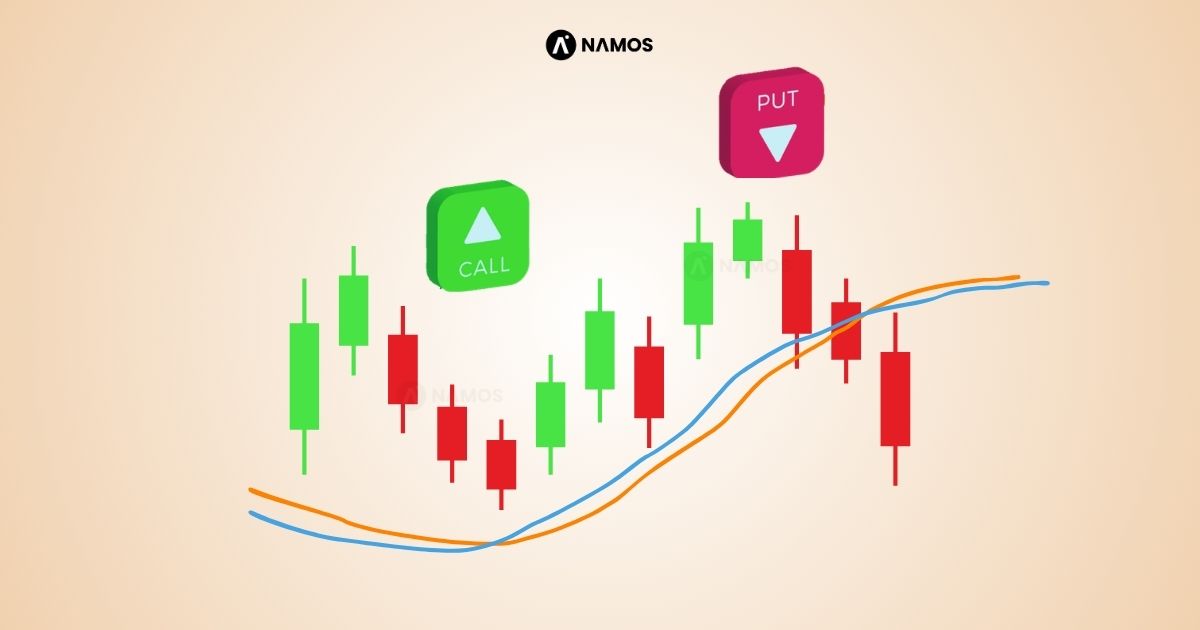
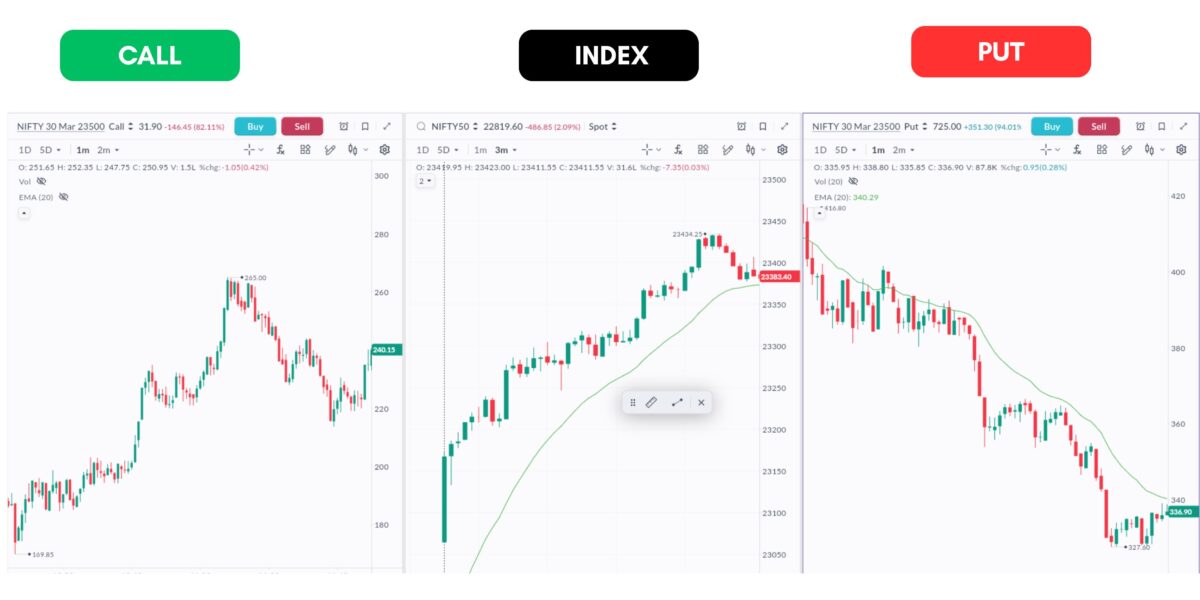
- When you expect the market to go up, you work with call options
- When you expect the market to go down, you work with put options
That is why understanding these two concepts is very important before doing any options trading.
In this article, What is a Put Option and a Call Option, we will clearly explain what these are, how they work, how traders use them, and why they are important in real market conditions.
What is a Put Option
A put option is used when you expect the market to go down. In simple terms, if you believe that the price of an index or stock will fall, you can buy a put option to take advantage of that move.
- If the market goes down, → put option buyer makes a profit.
- If the market goes up, → put option buyer may face a loss.
So, a put option is mainly used in a downtrend view.
Buyer and Seller in Put Options
In options trading, there are always two sides:
- Option Buyer → The person who buys the put option
- Option Seller (Writer) → The person who sells the put option
In India, most traders use index options for trading. Popular indices include:
- Nifty 50
- Bank Nifty
- Finnifty
- Sensex
What is a Call Option?
A call option is used when you expect the market to go up.
Example:
If the market is at 20,000 and you think it will rise, you buy a call option.
If the market goes up, you make a profit.
If it goes down, you may face a loss.
Buyer and Seller in Call Options
In every call option trade, there are two parties:
- Call Buyer:
The person who buys the call option.
He expects the market to go up. - Call Seller:
The person who sells the call option.
He expects the market to remain stable or decline.
In India, most traders use index options for trading. Popular indices include:
- Nifty 50
- Bank Nifty
- Finnifty
- Sensex
What is a strike price in options (With Example)
Strike price means the price level on which an option contract is based.
Simple understanding:
It is the level where you expect the market to move.
Example (With ATM, ITM, OTM)
Suppose the Nifty 50 is trading at 20,000
For Call Option:
- 20,000 CE → (ATM – At The Money)
- 20,100 CE → (OTM – Out of The Money)
- 19,900 CE → (ITM – In The Money)
For Put Option:
- 20,000 PE → (ATM)
- 19,900 PE → (OTM)
- 20,100 PE → (ITM)
Option Greeks Explained
| Greek | Meaning | Simple Understanding | Example |
|---|---|---|---|
| Delta | Measures the impact of volatility | Call: 0 to 1, Put: 0 to -1 | If Delta = 0.5 → Market moves 100 points → Option moves ~50 points |
| Theta | Measures time decay | Option loses value with time | If volatility increases, the option premium goes up |
| Vega | Even if the market doesn’t move, option price falls due to time | High volatility = price increase, Low volatility = price decrease | Delta changes quickly when the market moves fast |
| Gamma | Measures change in Delta | High gamma = faster price movement | Even if the market doesn’t move, the option price falls due to time |
| Rho | Measures the impact of the interest rate | Not very important for intraday trading | Changes slightly with interest rate movement |
How To Calculate Call and Put Option Payoffs (Simple Guide)
Understanding payoff is very important because it tells you profit or loss at expiry.
1. Call Option Payoff
Formula:
Call Payoff = (Spot Price – Strike Price – Premium Paid)
Example:
- Strike Price = 20,000
- Premium = ₹100
- Market (Spot) = 20,200
Calculation:
= 20,200 – 20,000 – 100
= ₹100 Profit
If market stays below 20,000 → Loss = Premium (₹100)
2. Put Option Payoff
Formula:
Put Payoff = (Strike Price – Spot Price – Premium Paid)
Example:
- Strike Price = 20,000
- Premium = ₹100
- Market (Spot) = 19,700
Calculation:
= 20,000 – 19,700 – 100
= ₹200 Profit
If market goes above 20,000 → Loss = Premium (₹100)
| Option Type | When You Profit | Max Loss | Formula |
|---|---|---|---|
| Call Option | The market goes down | Limited (Premium) | Spot – Strike – Premium |
| Put Option | Market goes down | Limited (Premium) | Strike – Spot – Premium |
Difference Between Call and Put Option (Simple Table)
| Point | Call Option | Put Option |
|---|---|---|
| Market View | Used when you expect the market to go down | Used when you expect market to go down |
| Profit Condition | Profit when price rises | Profit when price falls |
| Buyer Thinking | “Market upar jayega” | “Market niche jayega” |
| Seller Thinking | Market stable ya down rahega | Market stable ya up rahega |
| Loss (Buyer) | Limited to premium | Limited to premium |
| Usage | Bullish market | Bearish market |
Conclusion
In this article, we understood the basics of options trading in a simple and practical way — including call options, put options, strike price, option Greeks, and payoff calculation. These are the core concepts every beginner should know before entering the options market.
Options trading allows you to make profits in both rising and falling markets, but it is not easy money. It requires proper understanding, discipline, and risk management.
It is also important to be aware of the reality: according to Securities and Exchange Board of India (SEBI) data, most retail traders face losses in options trading. This clearly shows that without proper knowledge and planning, trading can be risky.