What if you could make money from the stock market without holding shares for months or even days?
What if you could buy a stock in the morning and sell it before the market closes — all in just a few hours?
Intraday trading is fast, exciting, and full of opportunity – but it also requires discipline, timing, and proper risk management. In this guide, you will clearly understand what intraday trading means, how it works in the Indian market, and a simple real-life example to make it easy to understand.
What is intraday trading? Real-life Example
Intraday trading means buying and selling a stock on the same day. In simple words, when you purchase a stock and sell it before the market closes on the same trading day, it is called intraday trading.
In the Indian stock market, trading hours are from 9:15 AM to 3:30 PM. Any trade that you enter and exit within this time frame on the same day is considered an intraday trade. You cannot carry the position to the next day.
Simple Definition (One Line)
Buying and selling a stock on the same day before market closing is called intraday trading.
Example of Intraday Trading
Suppose you buy shares of a company at ₹100 at 10:00 AM.
Later in the day, at 1:30 PM, the price increases to ₹105, and you sell the shares.
- Buy Price: ₹100
- Sell Price: ₹105
- Profit: ₹5 per share
Since you bought and sold the stock on the same day, this is an intraday trade.
If the price had fallen to ₹95 and you sold it, then you would have made a loss of ₹5 per share.
Why Traders Do Intraday Trading
- To earn profit from small price movements
- To use short-term market volatility
- No overnight risk (because positions are closed the same day)
Intraday trading requires good timing, discipline, and risk management. It is fast-paced and suitable for traders who can actively monitor the market.
Intraday Trading Rules (Simple and Practical Explanation)
Intraday trading looks simple — buy and sell on the same day — but without proper rules, it can become risky. Here are the most important intraday trading rules every trader should follow:
1. Always Use Stop Loss
This is the most important rule.
Before entering a trade, decide how much loss you are ready to take. Fix a stop loss and follow it strictly. This protects your capital.
2. Trade with a Proper Plan
Do not enter a trade randomly.
Have a clear strategy — whether it is based on RSI, EMA, price action, or breakout.
- Entry point
- Stop loss
- Target
Everything should be decided before you enter the trade.
3. Maintain Risk-Reward Ratio
A good trader always focuses on the risk-reward ratio.
For example:
If your stop loss is ₹10, your target should be at least ₹20 or ₹30 (1:2 or 1:3 ratio).
This helps you stay profitable even if some trades fail.
4. Avoid Overtrading
Taking too many trades in one day can lead to emotional decisions and losses.
Quality is more important than quantity.
1–3 good trades are better than 10 random trades.
5. Follow Market Trend
Trend is your best friend in intraday trading.
- In an uptrend, → Focus more on buying
- In a downtrend → Focus more on selling
Trading against the trend increases risk.
6. Do Not Carry Positions Overnight
Intraday means same-day trading.
Always square off your position before market closing to avoid penalties and overnight risk.
7. Control Emotions
Fear and greed destroy trading accounts.
- Do not increase the lot size after one loss.
- Do not become overconfident after one profit.
Stay calm and disciplined.
Intraday Trading Time in the Indian Market
Intraday trading means buying and selling within the same day — so understanding market timing is very important, especially in India.
Stock Market Intraday Timing (India)
In the Indian stock market:
- Market Opens: 9:15 AM
- Market Closes: 3:30 PM
- Pre-market session: 9:00 AM to 9:15 AM
- If you are trading stocks, Nifty, or Bank Nifty, all your intraday trades must be completed between 9:15 AM and 3:30 PM.
- If you do not close your position, most brokers automatically square it off before market closing
Best Time for Intraday Trading (Stocks)
Not all hours are the same. Some time periods are more volatile and better for trading.
9:15 AM – 10:30 AM
High volatility. Good for breakout traders.
11:30 AM – 1:30 PM
The market usually becomes slow and sideways. Risky for beginners.
2:00 PM – 3:15 PM
Again, good momentum can come. Suitable for trend-following traders.
So, timing selection is very important in intraday trading.
Commodity Intraday Trading Time (India)
If you trade commodities like gold, silver, or crude oil on exchanges like the Multi-Commodity Exchange of India (MCX), the timing is different.
Commodity Market Timing (MCX):
- Morning Session: 9:00 AM
- Closes: Around 11:30 PM (timing may vary slightly depending on the commodity)
This means commodity traders have more trading hours than the stock market.
For example:
- Gold and Silver trade till late at night.
- International markets influence crude oil, so evening sessions are important.
Important Difference
- Stock Intraday Trading: 9:15 AM – 3:30 PM
- Commodity Intraday Trading: 9:00 AM – Late Night (around 11:30 PM)
So if you are planning intraday trading, you must choose your market according to your availability and strategy.
Intraday Trading Charges (Simple Comparison)
Here’s a short and clear explanation of how intraday trading charges work on three popular Indian trading platforms:
| Broker / Platform | Intraday Brokerage | Notes |
|---|---|---|
| Zerodha | ₹20 or 0.03% per order | Standard industry rate + taxes apply |
| Dhan | ₹20 or 0.03% per order | Same as Zerodha, free delivery trading |
| Sahi | ₹10 or 0.05% per order | Lower charges, cheaper intraday trades |
Intraday Trading Indicators – Simple Explanation for Beginners
Indicators are tools that help traders understand market direction, momentum, and possible entry or exit points.
They do not predict the future, but they help you make decisions based on data instead of emotions.
In intraday trading, indicators are used to:
- Identify trend
- Find entry and exit points
- Confirm breakouts
- Avoid emotional trading
But remember — indicators should support your strategy, not control it. Too many indicators create confusion.
Now, let’s understand three popular intraday indicators in simple language.
EMA (Exponential Moving Average)
EMA is a trend-following indicator.
It shows the average price of a stock over a specific period, but it gives more importance to recent prices.
Simple Meaning:
EMA helps you understand whether the market is in an uptrend or a downtrend.
Example:
Suppose you use 20 EMA on a 5-minute chart.
- If price is above 20 EMA → Market is bullish
- If price is below 20 EMA → Market is bearish
If Nifty is trading above 20 EMA and taking support from it, you can look for buying opportunities.
EMA is very useful for trend-based intraday strategies.
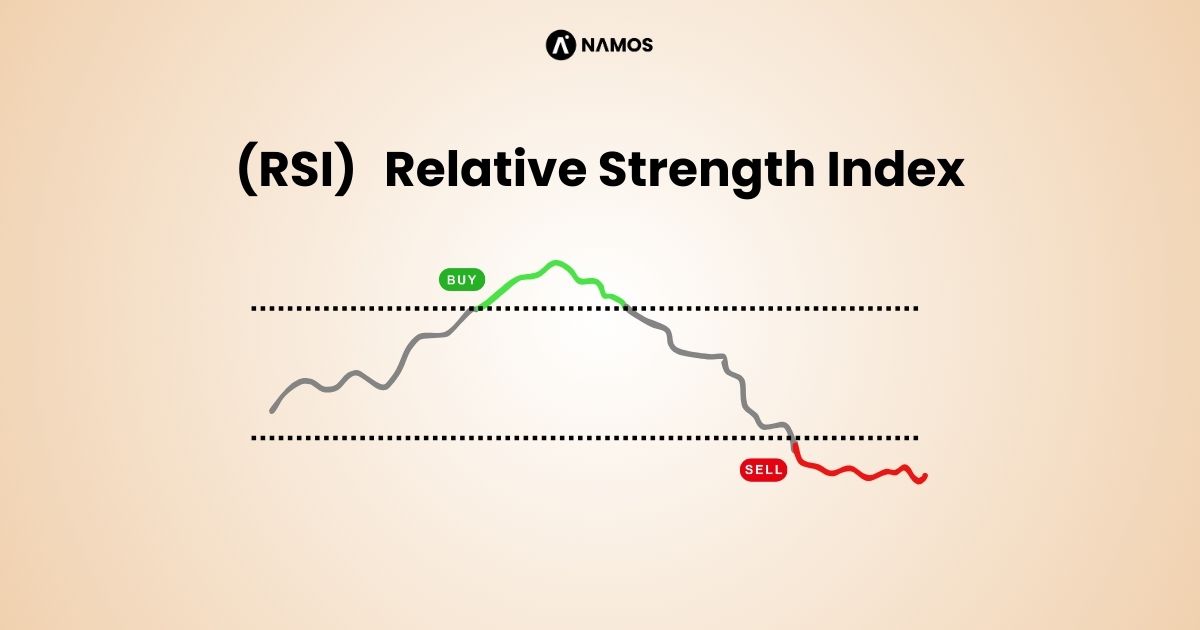
RSI (Relative Strength Index)
RSI is a momentum indicator.
It tells you whether a stock is overbought or oversold.
RSI moves between 0 and 100.
Basic Levels:
- Above 70 → Overbought (price may fall)
- Below 30 → Oversold (price may rise)
Simple Example:
If RSI is near 30 and the price is at a strong support, there may be a bounce opportunity.
If RSI is near 70 and the price is near resistance, selling pressure can come.
Many intraday traders also use 60–40 levels for trend trading:
- Above 60 → Bullish strength
- Below 40 → Bearish strength
RSI works best when combined with a trend.
Supertrend Indicator
Supertrend is a trend and stop-loss-based indicator.
It changes color depending on market direction.
How It Works:
- Green line below price → Buy signal
- Red line above price → Sell signal
Example:
If Bank Nifty gives a green Supertrend signal and the price closes above it, you may enter a buy trade.
Your stop loss can be placed below the supertrend line.
Supertrend is simple and beginner-friendly.
Important Rule About Indicators
- Do not use too many indicators together.
- Use 1 trend indicator (like EMA or Supertrend)
- Use 1 momentum indicator (like RSI)
- Always follow risk management.
Indicators give signals, but discipline gives profit.
Best Intraday Trading Books to Read (Beginner to Advanced)
Learning from great traders through books can make a big difference in your intraday trading journey. Here Books
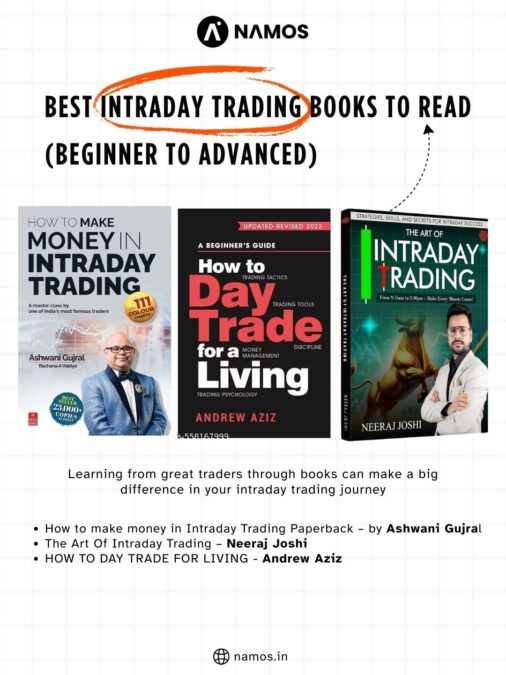
- How to make money in Intraday Trading Paperback – by Ashwani Gujral
- The Art Of Intraday Trading – Neeraj Joshi
- HOW TO DAY TRADE FOR LIVING – Andrew Aziz
Final Conclusion – Intraday Trading Complete Summary
Intraday trading is not just about buying and selling on the same day. It is a complete system that includes market timing, watchlist selection, setup preparation, indicators, risk management, discipline, and proper brokerage understanding.
From everything we discussed, one thing is clear:
Preparation before market open is more important than trading after market open.
A professional intraday trader:
- Selects limited stocks or an index in advance
- Prepares a proper watchlist
- Mark’s support and resistance levels
- Waits for strategy confirmation
- Uses indicators like EMA, RSI, or Supertrend for support
- Enters trade only when the setup matches
- Fixes stop loss and target before entry
- Follows the risk-reward ratio strictly
- Avoids emotional trading and revenge trades
Intraday trading is a business. It rewards discipline and punishes hope-based trading.
Hope trading, overtrading, increasing lot size emotionally, and shifting stop loss are the biggest reasons why most beginners lose money.
Indicators help. Books improve knowledge. Rules build discipline.
But risk management protects your capital.
The real goal is not making profit every day.
The real goal is protecting capital and staying consistent.