Most traders focus on how to make money, but very few learn how to protect it. One wrong trade without a stop loss can wipe out days or even months of profits. That is why stop loss is not just a tool — it is your survival system in trading. Today, you will learn all about the 7 ways to use stop loss that can help protect both your capital and your trading dreams.
What Is a Stop Loss in Trading?
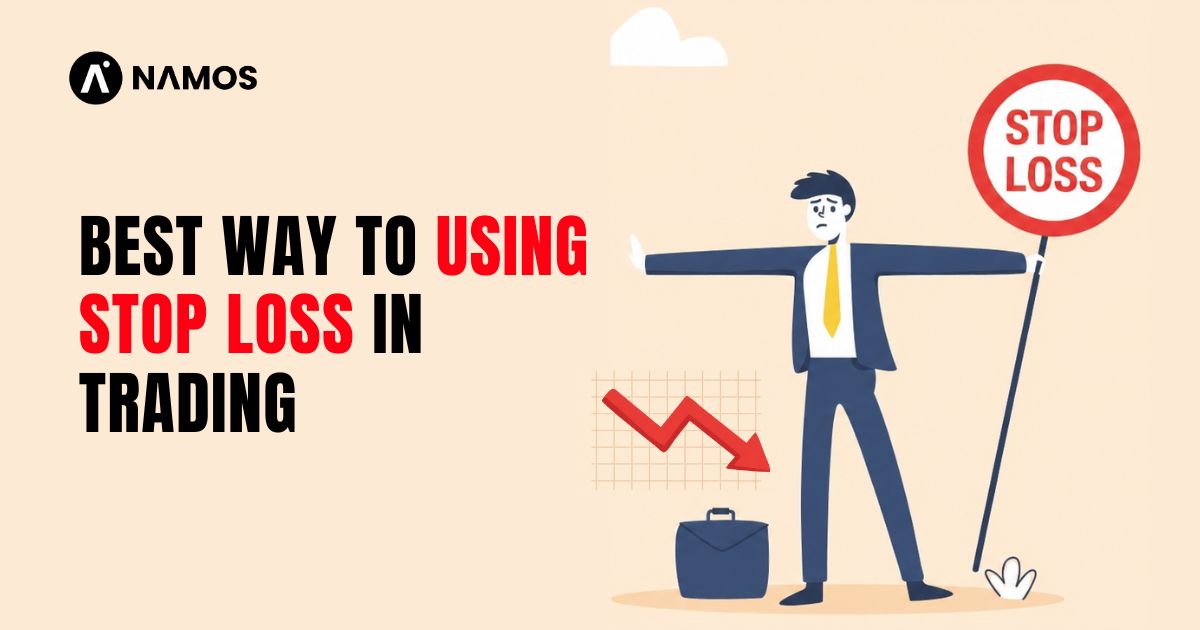
A stop loss is like a protection shield for your trading capital. It helps protect your money from bigger losses when the market moves against your trade. In simple words, a stop loss is a risk management tool that automatically limits your loss according to the price level you set before entering a trade.
Once you place a stop loss, your trade will automatically exit at your predefined level if the market does not move in your favor. Because of this, your losses remain controlled, and your emotions also stay more manageable during trading.
This is called using a stop loss in trading, and it is one of the most important habits for surviving in the market for the long run.
There is a famous saying in trading:
“If you learn to protect your money first, the market eventually learns to reward you.”
That is why professional traders focus more on protecting capital than chasing profits.
Why Every Trader Should Use a Stop Loss
Every trader wants profit, but not every trader knows how to survive in the market. A stop loss helps traders control their losses before they become too large. Without a stop loss, one emotional trade can damage your entire trading capital.
The market does not move according to anyone’s emotions or expectations. Sometimes even the best setup can fail because of news, volatility, or sudden market movement. That is why professional traders always use stop loss to protect their capital first.
Using a stop loss helps you:
- Control risk
- Protect your capital
- Reduce emotional trading
- Avoid big losses
- Stay in the market for the long run
A trader can recover from a small loss, but recovering from a huge loss becomes mentally and financially difficult. That is why stop loss is one of the most important tools in trading psychology and risk management.

1. Fixed Percentage Stop Loss
A fixed percentage stop loss is one of the simplest and most commonly used stop loss methods in trading. In this strategy, traders decide in advance how much percentage of loss they are willing to take on a trade.
For example, if you decide to risk only 2% on a trade and you buy a stock at ₹100, your stop loss would be placed at ₹98. If the market moves against your position and hits ₹98, your trade will automatically exit with a controlled loss.
2. Support and Resistance-Based Stop Loss
Support and resistance-based stop loss is one of the most commonly used methods among traders because it follows actual market structure and price behavior.
When traders buy near a support level, their expectation is that the market will bounce upward from that zone. That is why many traders place their stop loss slightly below the support area instead of placing it randomly.
Example (Sell Trade / Short Selling)
The same concept works in reverse during short selling.
When traders sell near a resistance level, they expect the market to reverse downward from that area. So they place their stop loss slightly above the resistance zone.
For example:
You short sell a stock at 200. The resistance area is nearby. In this situation, traders may place their stop loss between 202 and 205
If the market breaks above the resistance, it indicates that sellers are losing control and the market may continue moving upward. Because of this, the trade exits automatically with a limited loss.
3. Moving Average Stop Loss
Moving average stop loss is a popular method used by traders who follow trends in the market. In this strategy, traders use moving averages like the 20 EMA, 50 EMA, or 200 EMA as a dynamic support and resistance area for placing stop losses.
The idea behind this method is simple: As long as the price stays above the moving average in an uptrend, the trend is considered strong. But if the price breaks below the moving average, it may indicate weakness or a possible trend reversal.
Example (Buy Trade)
A stock is trading at 500
The 20 EMA is placed at 490
You enter a buy trade expecting the trend to continue upward
In this case, traders often place their stop loss slightly below the moving average, such as 488, 485
If the price breaks below the EMA, the trade exits automatically because the trend may no longer remain strong.
Example (Sell Trade)
In a downtrend, traders use the moving average as resistance.
For example:
You short-sell a stock at 300
The 20 EMA is near 305
You may place your stop loss slightly above the EMA:
307, 310
If the market moves above the moving average, it can signal that sellers are losing control.
4. ATR (Average True Range) Stop Loss
ATR (Average True Range) stop loss is a method used to place stop loss according to market volatility. This strategy helps traders avoid getting stopped out too early during normal market movement.
The ATR indicator measures how much a stock or market usually moves within a certain period. If volatility is high, traders keep a wider stop loss. If volatility is low, the stop loss remains smaller.
The main idea behind the ATR stop loss is: “Give the trade enough space to breathe according to market volatility.”
Example (Buy Trade)
You buy a stock at ₹100
The ATR value is ₹3
Many traders place their stop loss:
1 ATR below the entry
Or sometimes 1.5 ATR below the entry
So your stop loss may be:
₹97
Or around ₹95.5
This prevents small normal price fluctuations from hitting your stop loss too quickly.
Example (Sell Trade)
You short-sell a stock at ₹200
ATR value is ₹4
Your stop loss may be placed:
Around ₹204
Or slightly higher, depending on your strategy
If the market moves beyond normal volatility, the trade exits automatically.

5. Candle High / Low Stop Loss Method
The candle high/low stop loss method is a simple and popular strategy used by price action traders. In this method, traders place their stop loss based on the high or low of an important candle.
The logic behind this method is: If the market breaks the high or low of a strong candle against your trade direction, the setup may no longer remain valid.
Example (Buy Trade)
A bullish candle forms near support
You buy the stock at ₹150
The low of the bullish candle is ₹145
In this case, traders usually place the stop loss slightly below the candle low, such as:
₹144
Or ₹143
If the market breaks below the candle low, it may indicate weakness and your trade exits automatically with a controlled loss.
Example (Sell Trade)
A bearish candle forms near resistance
You short sell at ₹300
The high of the bearish candle is ₹305
Your stop loss can be placed slightly above the candle high:
₹306
Or ₹307
If the market moves above the candle high, it may signal strength from buyers.
6. Trailing Stop Loss Strategy
A trailing stop loss is a smart stop-loss method that moves along with your profit as the market moves in your favor. Unlike a fixed stop loss, a trailing stop loss helps traders lock in profits while still allowing the trade to continue running.
The main idea behind this strategy is: “Protect profits without exiting the trade too early.”
Example (Buy Trade)
Suppose:
You buy a stock at ₹100
Initial stop loss is at ₹95
Now the stock starts moving upward:
Price reaches ₹110
You move your stop loss from ₹95 to ₹105
If the market reverses suddenly, you still secure some profit instead of turning the trade into a loss.
As the market continues higher, traders keep shifting the stop loss upward step by step.
Risk-Reward Ratio and Stop Loss Placement
A stop loss should never be placed randomly. Professional traders always use a proper risk-reward ratio before entering a trade.
Risk-reward ratio simply means: “How much money you are ready to lose to earn how much profit.”
For example:
You buy a stock at ₹100 , You place your stop loss at ₹95
This means your total risk is only ₹5
Now suppose your target is:
₹110
This means:
You are risking ₹5
To earn ₹10
So your risk-reward ratio becomes:
1:2
This is important because even if some trades fail, one good winning trade can recover your small losses.
Professional traders focus more on controlling losses than chasing random profits. That is why stop loss and risk-reward ratio always go together in trading.
Conclusion
Stop loss is not just a trading feature — it is one of the most important survival tools in the stock market. Every professional trader understands that protecting capital is more important than chasing profits blindly. Whether you use support and resistance, moving averages, ATR, candle highs/lows, or trailing stop loss, the main purpose always remains the same: controlling risk and protecting your account from unnecessary losses.
A trader who learns to manage losses properly can survive long enough to improve skills, build consistency, and grow in the market over time. In trading, small controlled losses are normal, but uncontrolled losses can destroy both confidence and capital. That is why understanding how to use stop loss correctly is one of the biggest steps toward becoming a disciplined trader.
Disclaimer
This article is written only for educational and informational purposes. The stock market and options trading involve financial risk, and profits or losses depend completely on individual trading decisions and market conditions. Before taking any trade or investment decision, always do your own research and risk analysis.
Namos, the author and the writer of this article, are not responsible for any financial loss, trading loss, or damage caused by using the information shared in this content. Trading in the stock market carries risk, so always trade responsibly and use proper risk management.