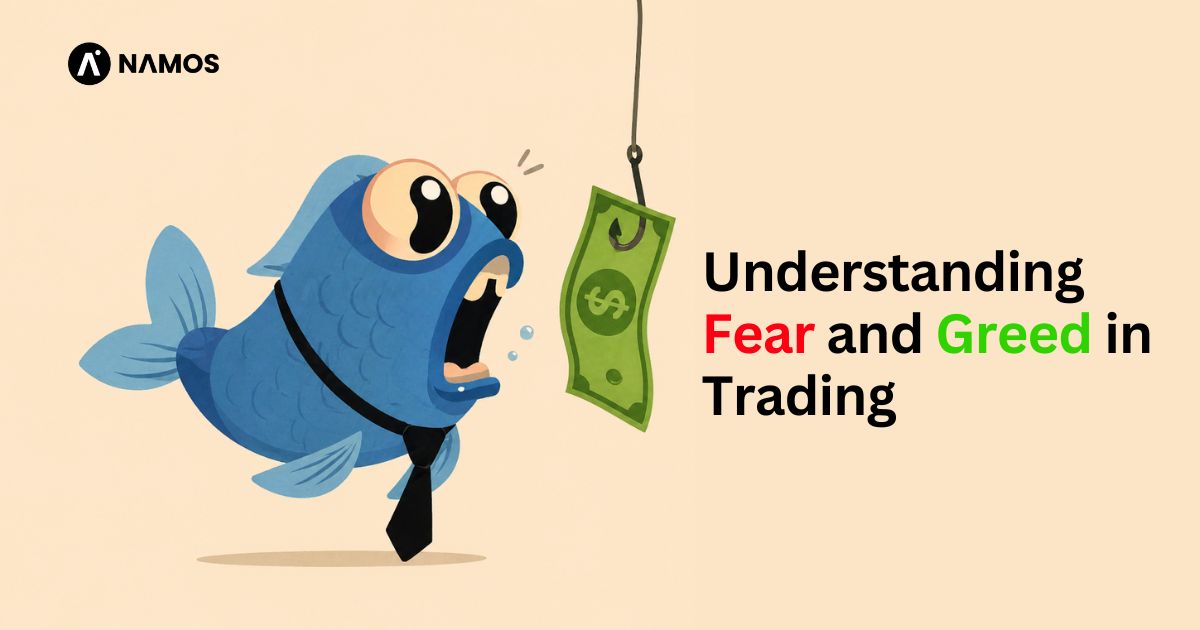
Most traders don’t lose because of a bad strategy-they lose because of fear and greed. Think about it: many times we buy a stock after it has already moved up, just because we don’t want to miss out (that’s greed). And when the price starts falling, we panic and sell quickly (that’s fear). Sometimes we even exit a good trade too early out of fear, and other times we keep holding a losing trade hoping it will come back-again, greed.
What is Fear in Trading ?
Fear in trading is an emotional reaction where a trader’s mind becomes unstable, leading to overthinking, confusion, and poor decision-making in the market. Instead of following a clear plan, traders start reacting emotionally, which often results in wrong entries or exits.
This fear usually comes from several common reasons:
- Lack of knowledge and experience
- Getting influenced by others and trading without understanding
- Trading without proper practice or strategy
- Acting based on emotions instead of rules
In simple terms, when you trade without clarity and confidence, your mind shifts from logic to fear, and that’s when mistakes start happening.
What is Greed in Trading ?
Greed in trading is an emotional state where a trader becomes aggressive and ego-driven, especially when things don’t go as expected. It often turns into a matter of self-respect, where instead of accepting a wrong trade, the trader tries again and again to prove themselves right.
Think about this scenario:
you enter a stock expecting it to go up, but instead it starts going down. Instead of accepting the loss, your mind says, “No, I was right… let me try again.” So you take another trade to recover the loss, and if that also doesn’t work, you try again. This habit of repeating trades again and again just to recover quickly or prove yourself right is what we call greed or an aggressive trading mindset.
Common Reasons Behind Greed
- Lack of Discipline.
- Greed for Quick Money.
- Ego and Self-Respect Issue.
- Overconfidence After Profits
- Influence of Others (FOMO)
Why Fear and Greed Happen (Root Causes)
One of the biggest reasons greed increases in trading is the lack of proper knowledge, experience, and planning. Most beginners enter the market without fully understanding how it works. From the very first day, they start trading after getting influenced by someone else or by seeing aggressive profits, without knowing the risks involved
Many traders also enter trades without any proper strategy or back-testing. They don’t test their setup or make a clear plan (entry, stop loss, target), and directly jump into the market. Because of this, they face losses and then try to recover quickly, which leads to greedy behavior.
Another common mistake is blindly following others—copying trades or signals without understanding the logic behind them. This creates confusion and emotional decisions.
Along with this, beginners often overtrade with high risk, without calculating proper risk-reward based on their capital. Instead of managing risk, they try to earn more quickly, which increases greed and leads to bigger losses.
Control Fear and Greed to Manage Trading Psychology
Controlling fear and greed is not about removing emotions—it’s about managing them with a clear system and discipline. If you follow a structured approach, these emotions automatically come under control.
Trade with a Clear Plan
Always define your entry, stop loss, and target before entering. When your plan is clear, you don’t react emotionally.
Follow Risk Management
Never risk too much capital in a single trade. Use proper risk-reward ratio and position sizing. This reduces pressure and emotional decisions.
Avoid Overtrading
Don’t take trades just to recover losses or increase profit quickly. Wait for your setup only.
Stick to Rules, Not Emotions
Once you define your strategy, follow it strictly. Don’t change decisions based on fear or greed.
Keep a Trading Journal
Write down every trade—what you did right and wrong. This helps you improve and stay aware of your emotions.
Continuous Learning & Practice
Never stop learning. Backtest your strategy and gain confidence. The more clarity you have, the less emotional you become.
Conclusion
Fear and greed are the two most powerful emotions in trading, and they can either make or break your journey. No matter how good your strategy is, if you cannot control these emotions, you will keep facing losses and inconsistency.